
Why a Custom Leather Yardage Book Cover Belongs in Your Golf Bag
A leather yardage book cover is one of those golf accessories that looks like a luxury until you've used one for a full season. Then it becomes a non-negotiable. At Fairway Leathers, we've spent over a decade crafting handmade leather golf accessories for players who understand that what you carry on the course reflects how seriously you take the game.
The case for a custom leather yardage book cover comes down to three things: protection, function, and the quiet confidence of carrying something built to last. Your yardage book takes a beating over 18 holes, shoved into pockets, pulled out in rain, bent against cart seats, and handled with sweaty hands. A premium leather cover keeps the pages intact, the notes legible, and your course management sharp.
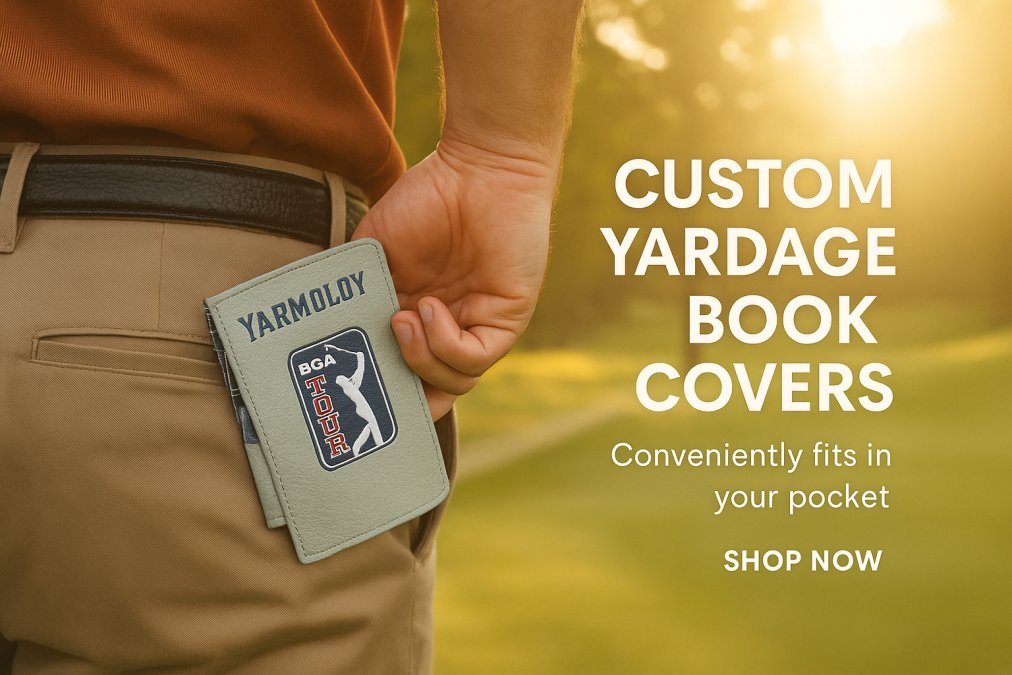
Close-up of a golfer's hands holding an open full-grain leather yardage book cover on a golf course, with a green fairway softly visible in the background under warm afternoon sunlight
The cover itself becomes part of your routine. Flipping it open on the tee box, referencing pin sheets without fumbling, tucking it back into a slim-profile holder that sits flat in your pocket. The tactile feedback of well-made leather is genuinely different from plastic or synthetic alternatives. It signals intention, and on a competitive round, intention matters.
Below, we'll walk through what separates a quality leather yardage book cover from generic alternatives, including material differences, construction standards, personalization options, and maintenance.
Shop Our Handcrafted Yardage Book Covers
- Leather Yardage Book Cover
- Embossed with Exotic Skin Yardage Book Cover
- Custom Yardage Book Covers
- Custom Exotic Skin Yardage Book Covers
Full-Grain Leather vs. Other Materials: What Actually Holds Up on the Course
The material question is where most buyers go wrong. Not all leather is the same, and the difference between full-grain and corrected-grain or bonded leather determines how long your cover lasts and whether it actually protects your scorecard in rough conditions.
Full-Grain Leather: The Standard Worth Knowing
Full-grain leather is the highest quality cut from the hide. It retains the entire grain surface, including natural markings and texture that make each piece unique. Because the surface hasn't been sanded or buffed to remove imperfections, the fiber structure stays dense and intact. That density gives full-grain leather its weather resistance and long-term durability.
Synthetic covers and lower-grade leathers peel, crack, or delaminate after a season or two of regular use. Full-grain leather, properly cared for, gets better with age. According to Leather Industries of America's material education resources, full-grain leather's tight fiber structure makes it significantly more resistant to moisture and abrasion than corrected or split-grain alternatives.
How Leather Develops a Patina Over Time
Full-grain leather develops a patina over time, a natural darkening and richening of the surface from oils, sunlight, and repeated handling. A synthetic cover degrades. A full-grain leather cover evolves. After a few seasons, your leather yardage book cover will look like it belongs to someone who plays serious golf. The patina tells a story: worn edges, softened texture, the way it falls open naturally to your most-referenced pages. That's not wear. That's character.
Durability, Craftsmanship, and the Hand-Stitched Difference
Hand-stitched construction using waxed thread is the benchmark for a leather yardage book cover built for real use. Machine stitching can produce consistent results at scale, but hand-stitching with waxed thread creates a saddle-stitch pattern where each stitch locks independently. If one stitch breaks, the seam doesn't unravel. That structural integrity separates a cover that lasts a season from one that lasts a decade.
The stitching integrity on a quality cover is visible: consistent spacing, thread sitting flush, and wax coating protecting against moisture infiltration along the seam. Durable construction also means reinforced corners, a flip-up design that opens cleanly without stressing the spine, and a pocket-sized profile that doesn't add bulk.
Pro TipWhen evaluating any leather yardage book cover, look at the back of the stitching, not just the front. Clean, even stitches on both sides indicate hand-finishing. A single row of machine stitching visible from the reverse usually means lower-grade construction.
The craftsmanship standards that define premium golf accessories are outlined in the Leatherworkers Guild's guide to hand-stitching techniques. The saddle-stitch method is exactly what distinguishes handcrafted covers from factory-produced alternatives.
Personalized Golf Yardage Book Holder: More Than Just Your Name
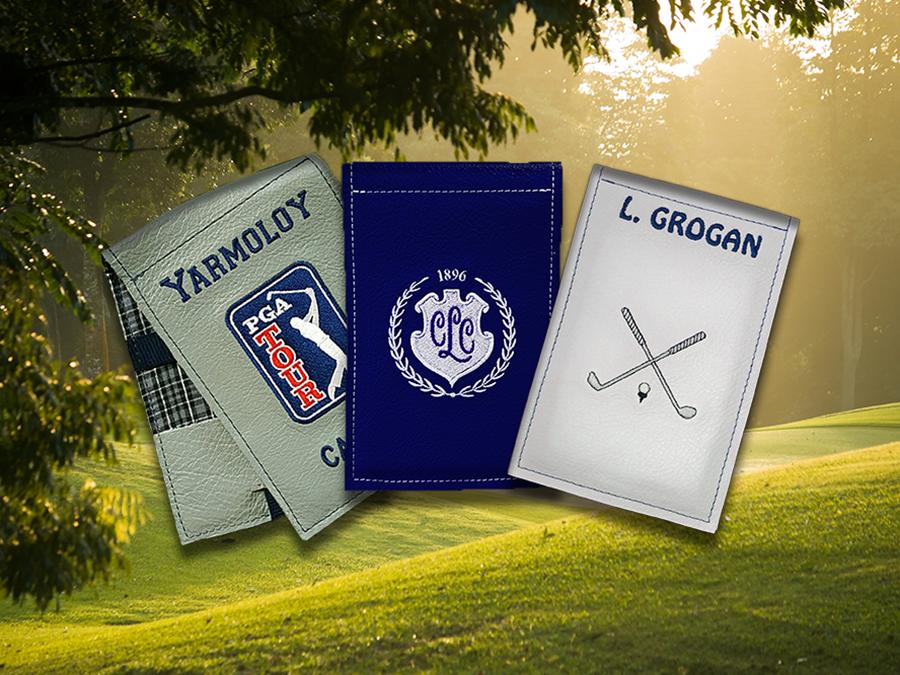
Personalization is often dismissed as a vanity feature. That's a mistake. A personalized golf yardage book holder makes the tool yours in a way that changes how you interact with it. When your initials or club logo are embossed into the leather, the cover stops being an accessory and becomes gear you're invested in maintaining.
Flat lay of a personalized leather yardage book holder with custom embossing on the front panel, placed on a golf bag alongside tees and a glove on natural grass in soft daylight
Custom embossing on full-grain leather is particularly effective because the grain accepts the impression cleanly and holds it permanently. Bespoke design options extend beyond initials: club crests, tournament logos, custom colorways, and exotic skin panels are all achievable through a made-to-order process.
For gift shoppers, this is the difference between a thoughtful gift and a generic one. A leather yardage book cover with a golfer's name or home club embossed on the front is not something they'll find at a big-box retailer. The personalization process at Fairway Leathers is built into the production workflow from the start, so customization isn't an afterthought applied to a stock item.
Key TakeawayA personalized leather yardage book cover increases how often golfers use it and how carefully they maintain it, which directly supports better course management habits.
How to Choose a Yardage Book Cover That Fits Your Game
Choosing the right leather yardage book cover requires matching the product to how you actually play.
Pocket Fit, Slim Profile, and Ergonomics
A poorly fitted cover disrupts your back-pocket routine and slows down your pre-shot process. A slim profile cover that sits flat and opens cleanly is a genuine performance advantage. Standard yardage books are approximately 4 x 7 inches, but sizing varies by course. Before ordering, confirm the dimensions of the yardage books used at your home course.
The flip-up design is worth prioritizing. It allows one-handed access to the scorecard without removing the cover from your pocket, which matters when you're reading a putt and don't want to set anything down on a wet green.
|
Feature |
Why It Matters |
What to Look For |
|---|---|---|
|
Slim profile |
Fits cleanly in back pocket |
No added bulk beyond the book itself |
|
Flip-up design |
One-handed access on the course |
Secure but easy-release closure |
|
Correct sizing |
Pages protected without bunching |
Confirm yardage book dimensions first |
|
Waxed thread stitching |
Seam integrity in wet conditions |
Visible, consistent stitching on both sides |
|
Full-grain leather |
Long-term durability and patina |
Natural grain texture, no surface coating |
Scorecard Holder vs. Yardage Book: Knowing the Difference
A scorecard holder is typically a flat, open-faced sleeve for a single scorecard during casual rounds. A yardage book cover is a more structured, often flip-top holder designed to protect a multi-page yardage book used in tournament play. If you play primarily recreational rounds, a scorecard holder may be sufficient. If you play competitive golf or manage your own course strategy with detailed yardage notes, a yardage book cover is the right tool.
Custom Golf Accessories for Teams and Tournament Play
Custom golf accessories for teams serve two functions: they create visual cohesion on the course and communicate organizational quality to players and spectators. A set of matching leather yardage book covers with a tournament logo embossed on each one signals that the event is run with attention to detail.
For golf club managers sourcing merchandise for a pro shop, custom-branded leather accessories occupy a distinct market position. They're not competing on price. They're competing on quality and exclusivity, which is exactly where premium leather wins. Fairway Leathers operates on a made-to-order model, so every piece in a team order receives the same level of craftsmanship as a single custom piece.
According to >the National Golf Foundation's research on golf participation trends, the premium golf accessories segment continues to grow as golfers invest more in gear that reflects their commitment to the game.
Watch OutIf you're ordering custom leather accessories for a tournament with a fixed date, confirm production timelines before placing the order. Handcrafted, made-to-order pieces require more lead time than stock items. Plan accordingly to avoid deadline pressure.
Leather Maintenance: Keeping Your Cover in Tournament Condition
Maintenance is not damage control. It's what allows full-grain leather to develop properly. You're not just preserving the cover. You're shaping how it ages.
After a round in wet conditions, wipe the cover with a dry cloth and allow it to air dry at room temperature. Never use direct heat. Conditioning is the most important and most neglected step. A quality leather conditioner applied every few months keeps the fibers supple and prevents the surface from drying out between rounds.
For covers with custom embossing, apply conditioner carefully around the embossed area with a soft cloth. Avoid saturating the embossing, as excessive product can soften the impression over time.
Storage matters more than most golfers realize. Storing a leather cover compressed in a tight bag pocket for months will cause it to take on a permanent crease. Store it flat or in a breathable pouch when not in use.
The Leather Conservation Centre's guidance on leather care and preservation recommends avoiding silicone-based products on vegetable-tanned or natural-finish leathers, as they can interfere with the leather's ability to breathe and develop a natural patina.
The full maintenance routine:
- Wipe clean with a dry cloth after every round in wet or humid conditions
- Apply a quality leather conditioner every 2-3 months during active use
- Allow the cover to air dry naturally after exposure to rain. No heat sources
- Store flat or in a breathable pouch during off-season
- Inspect stitching periodically. Address any loosening before it becomes a seam failure
- Keep away from direct sunlight for extended periods to prevent uneven fading
Properly maintained full-grain leather doesn't just survive regular use. It improves. The patina deepens, the texture softens, and the cover becomes more distinctly yours with every round.
Golfers who want gear that performs at the same level they do face a straightforward problem: most of what's available is mass-produced to a price point, not a standard. Fairway Leathers was built to solve exactly that. Every leather yardage book cover we produce is handcrafted to order, with full-grain leather, hand-stitching with waxed thread, and custom embossing options that make each piece specific to the person carrying it. Backed by a 100% satisfaction guarantee, it's the kind of investment that pays off every round. Start shopping at Fairway Leathers and carry something worth carrying.
Frequently Asked Questions
What are the primary benefits of using a leather yardage book cover?
A custom leather yardage book cover protects your scorecard and pin sheets from rain, sweat, and repeated handling. Full-grain leather develops a patina over time, meaning it gets better-looking with use rather than worn out. The slim profile fits easily in a back pocket, and the tactile feedback of quality leather makes flipping to the right page faster during play. Custom embossing or personalized logos add a professional touch that mass-produced covers simply cannot replicate.
Why do professional golfers prefer leather yardage book covers?
Professional golfers depend on their yardage books for course management decisions on every hole. A leather cover keeps those notes dry, legible, and organized under tournament conditions. The flip-up design common in quality leather covers allows quick access to pin sheets without removing the book. Beyond function, a leather yardage book cover signals attention to detail, which is something professionals take seriously across all their golf gear and golf accessories.
Are personalized leather golf accessories worth the investment?
For avid golfers, yes. A handcrafted leather yardage book cover or golf scorecard holder is made to last years, not one season. The durability of full-grain leather with waxed thread stitching far outlasts synthetic or faux-leather alternatives. Personalization through custom embossing also makes the piece uniquely yours, which matters both on the course and as a gift. Fairway Leathers backs every made-to-order piece with a 100% satisfaction guarantee, reducing the risk of the purchase.
Can a golf team order matching custom leather yardage book covers?
Yes. Custom golf accessories for teams are a practical choice for tournaments, club events, or coordinated team gear. A consistent personalized logo or bespoke design across the whole team creates a professional appearance. Fairway Leathers works with coaches, tournament organizers, and club managers on coordinated orders. Lead times for custom work are typically around 4-5 weeks, so ordering ahead of your event date is important. Contact Fairway Leathers directly to discuss your team's needs and current turnaround times.
This article was written using GrandRanker